
Ventilation in Reefer Containers
Reefer Ventilation: reduce food waste and financial losses
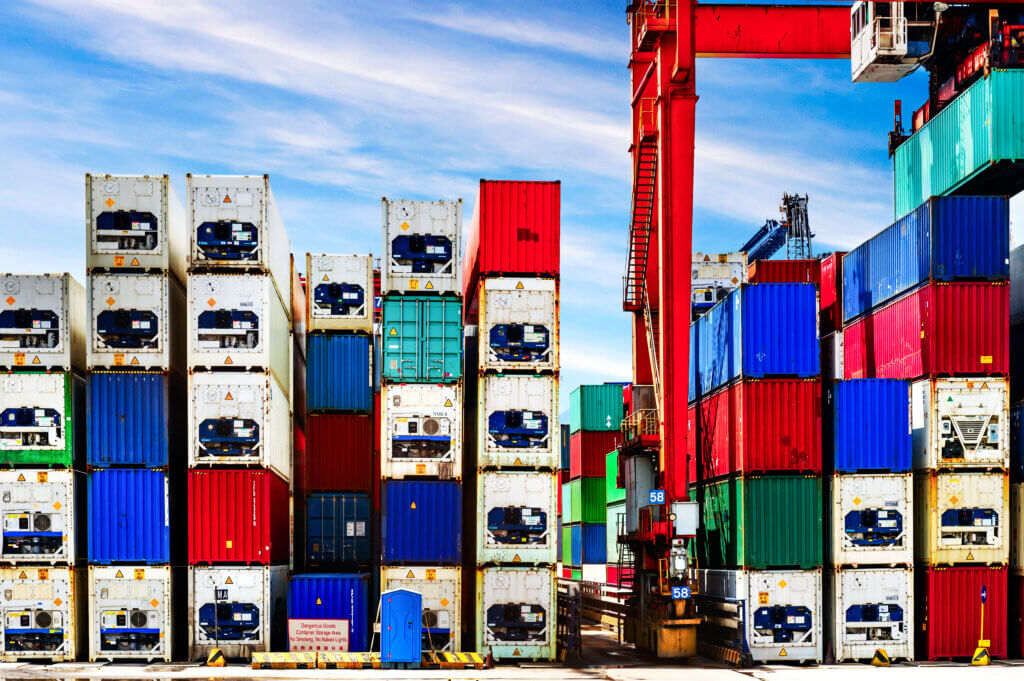
Huge quantities of fruit and vegetables are daily transported in refrigerated containers.
A large percentage never reaches our plates a.o. due to poor temperature management during storage and transport causing enormous food waste and financial losses.
Inserting spacers between the stacked layers in reefer-containers is a simple way to facilitiate ventilation and thus noticeably reduce such improprieties.
Inert or live cargo - Air flow is key
Cargoes transported in reefer containers include foods such as fruit, vegetables, meat, poultry, fish etz. as well as high value pharma-products, representing values from thousands to millions of euros pr container.
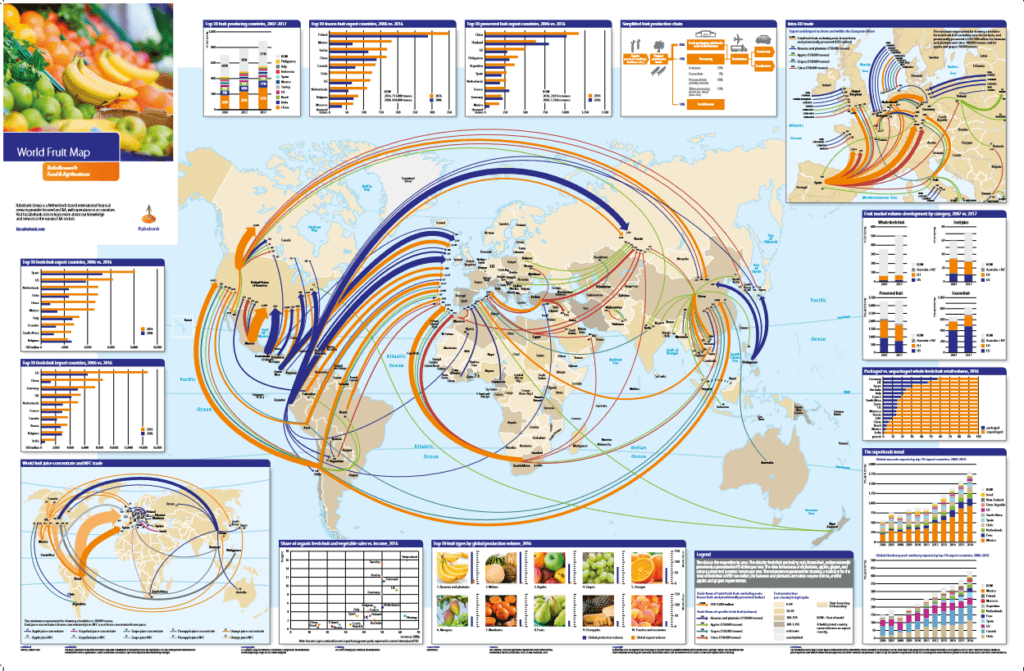
The map below shows basic figures for the global transport of fruit. Find similar figures for vegetables at Rabo Bank
A major distingtion is whether the cargo is “living”, such as fruit, or inactive such as frozen foodstuf.
For example, bananas consume oxygen, emit CO2 and ethylene, and generate heat, necessitating a fresh air supply while removing CO2 and heat during transport.
Conversely, inert and frozen goods require only a constant temperature.
Without ventilation layers between the stacked boxes mainly the outward facing sides are exposed to ventilation as air-flow will always find the path with least resistance.
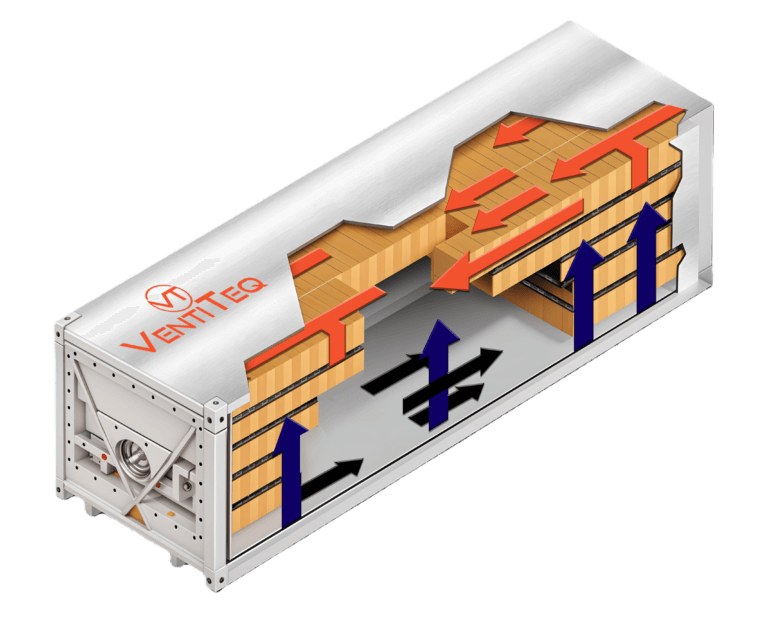
By inserting spacers between your stacked layers, not only two additional contact surfaces are created but also a larger share of the air-flow will find its way trought the cavities of the spacers.
All in all this to a greater extend allows warm or cold air, gasses, and humidity to be conducted away from the boxes.
Max. Airflow
The unique, 50 mm high and supportive design of the VentiTeq spacers provides minimal air resistance and facilitates as such maximum airflow in your reeer container/-truck.
Uniform Quality
Using ventilation spacers not only facilitate a uniform temperature throughout the container, but also carries away gases and thus contributes to uniform quality and extended shelf life
Stable Pallet-Stacks
The combination of thin, unevenly filled boxes and irregular products often leads to uneven box layers and thus unstable pallet stacks. VentiTeq spacera help absorbin unevenness and thus stabilizing the pallet stacks.
As with most products, there are also big differences in spacer designs.
Minimal air resistance and support of your box layers are two crucial factors.
VentiTeq spacers allow higher air flow and therefore facilitate a noticable more efficient ventilation between your delicate and valuable products.
How ventilation spacers enhance shelf life
By inserting spacers between the stacked boxes, airflow not only accesses also the center of the pallet stacks but circulates more freely throughout the entire reefer compartment.
This not only facilitates a more even temperature but also reduces harmful gas accumulations between the stacked products.
All in all this influences your product’s quality, reduced food waste and increased shelf life – all with a positive effect on your bottom line.
Read more about capacity and product handling
Contact
Throughout the years we have helped numerous companies in streamlining their processes with stacked layers.
Are you also challenged by unstable pallet stacks or inappropriateness due to insufficient ventilation between stacked layers
Feel free to contact us and see, whether our spacers can be the solution also to your challenges